Electricity:
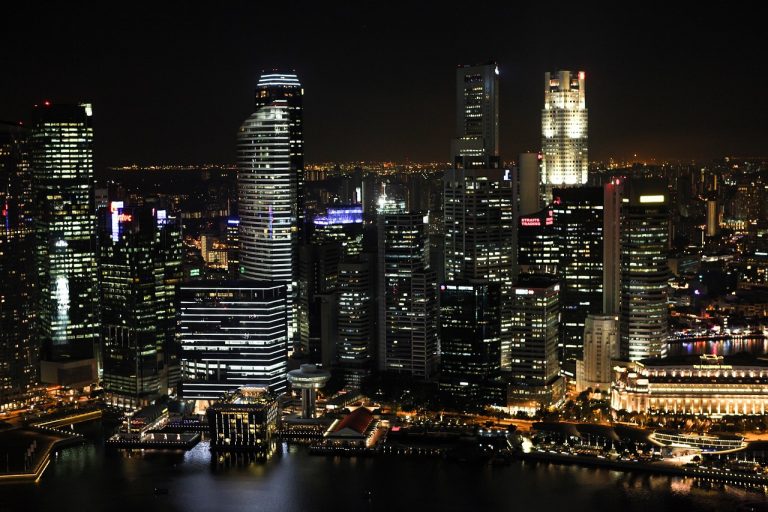
We use electricity all the time, and not many of us acknowledge our dependence on electricity. Imagine if our town looses power for 48 hours, electronic gadgets that entertain us run out of battery, no internet connectivity, foods get stale, no lights, AC or fan, we might run out of water and so much more! We can safely say that access to electricity is the base of a well functioning society.
How did we get here? History books teach us how humans utilized different forms of energy to free up their time and increase productivity, forming big civilizations. Same is the case with electricity, however we moved a step ahead in early 19th century by transmitting power using mechanical methods like hydraulic transmission, and again in late 19th century by centralized generation of electricity. If transformers and standardization of electricity transmission wouldn’t have happened, we would have had small set of generators located near every house to power the house. Invention of the transformers, incandescent bulb, adoption of AC and large development of centralized generation-distribution network for World War, paved way to reduced cost and higher adoption. (More detailed history in Networks of Power: Electrification in Western Society, 1880-1930)
Now, electricity is not just part of our life, electricity is modern life. Every bit of modern civilization is built on an assumption of stable and affordable electricity.
Energy Availability:
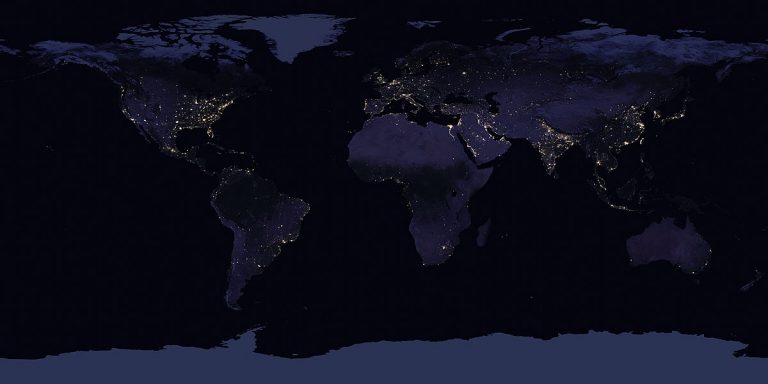
There has been tremendous increase in the availability of electricity around the world, many new remote rural and non-rural areas were connected by transmission lines over the last couple of years. However, still a large portion of our world is a long way away from 100% electricity. Hover over the countries in the below map to see the access to electricity as a percentage of their population.
Most parts of the world connected by transmission lines were able to improve people’s quality of life by easing up laborious tasks in agriculture and other related areas, leading to higher productivity. A reliable source of electricity provides better agricultural management, leading to higher food yield and food security. It also provides access to purification methods for cleaner water, cleaner cooking and better sanitation. Resulting in increased life expectancy and better healthcare. It also opens up new avenues for individuals to generate income. International development groups and economists often point out that access to electricity is a basic requirement for economic progress. Then why is that even after a century of electric grid, a large part of our world population doesn’t have access to power? Mainly because of economic and political conditions, political uncertainty causes economic issues. Similar to economic poverty, unable to access electricity can be termed as energy poverty. Energy poverty causes lower quality of life, and lower economic outcome. It’s a vicious cycle, but it can be broken.
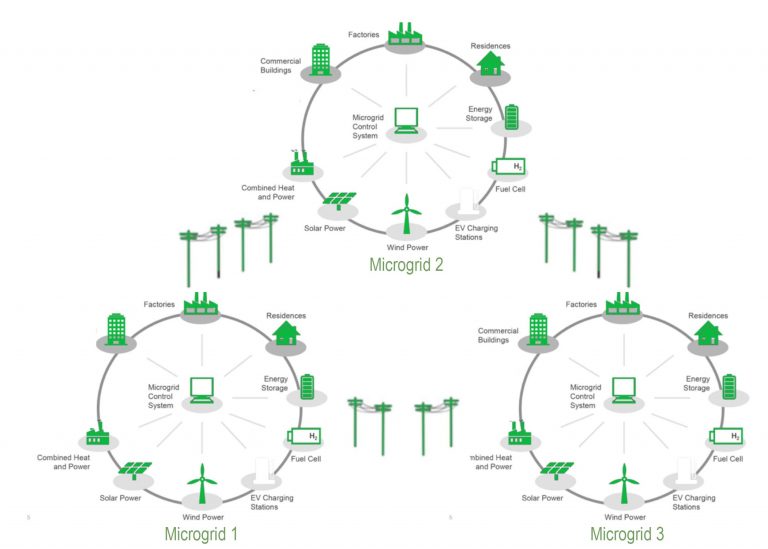
Microgrids: If people in a community get together and generate electricity for themselves, it can help improve each of those community and thereby building economic strength of the people. Microgrids are stand alone systems in which generation and use of electricity happens within a geographical location. Electricity is generated from various source like solar, wind and biomass. Energy can be used directly from the generation source or stored for later use. If a community powers all its houses and equipments using a single microgrid or a series of interconnected microgrids, then it doesn’t have to rely on the government or head of state to provide them with electricity. The power is with the people.
Eventually, each community can be brought out from darkness with their own power.
Single Point of Failure: If you look at energy availability in urban areas, majority of them get electricity from a centralized generation system, transmitted over long distance lines. Most of these transmission lines have problems in the event of a natural disaster or some form of inclement weather. A single event can bring a city or multiple cities to darkness. Nowadays, the frequency of natural disaster has increased tremendously, and we also have threat of cyber attacks on electric grids. Our electric system has a single point of failure at the generation point and also at the transmission lines. As we are rely more on electricity, even for our basic needs, having a single point of failure is a huge risk to the society. We have to think of redundancy or security.
Distributed Energy Systems: Each microgrid is a self contained unit, generating electricity and using it, and when a number of these self-contained units are interconnected, it becomes a distributed network. Each unit can provide power for itself, and when there is an energy requirement at any other unit, electricity can be transmitted to them. Thus, making each unit self sustainable, increasing redundancy among units and avoiding a single point of failure.
Power to the People:
I think everyone will agree that microgrids are beneficial for our electric system. However, currently these are expensive to build. They are being built for high end clients for them to be able to go off the utility grid or as a redundancy in case of a disaster. New finance companies and individuals who are passionate about renewable energy have started to invest in microgrid projects (third party financing) for clients who cannot afford the upfront cost. However, if we want to make microgrid a tool to eradicate energy poverty, we have to come up with new ways to make these projects happen.
Innovation: There has been a drastic decline in prices of solar panels, storage batteries and other components. If this trend continues, we would be able to achieve 100% electrification very quickly. One of the biggest innovation is in terms of business model. Companies are coming up with creative ways to develop projects. Third party financing as discussed earlier is being used extensively now. I recently learned about the pay as you go model being used in some places in Africa and surprisingly is now becoming popular in developed countries as an alternative to standard utility billing. In this model, you pay for a certain amount of electricity upfront, like a prepaid mobile phone service. The combination of creative business model and low cost technical innovation will accelerate electrification around the globe.
Role of Utility: Currently, utility have a monopoly on electricity. They are the sole provider of an essential commodity, which we cannot live without. However, as microgrids keep evolving and more power generation equipments are installed by common people, the utility business model will collapse. However, utility is in a unique position to modify its business model to become a connecter. They already have transmission lines spanning millions of kilometers. If instead of transferring power only in one direction, they start transferring power between various connected microgrids, they could control the traffic and become relevant in the new age of power. Utilities could also build their own microgrids or finance generation assets for communities, which provides them additional revenue sources.
Energy Managed by User: We live in an increasingly globalized world, but at the same time we are also moving towards a self-sustainable world, where each community can take care of itself locally. Microgrids and Distributed Energy is a trend in the same direction. Technological innovations like internet of things and blockchain are helping this trend by providing accurate reporting and peer to peer trading. In the end, the power to generate power and manage it, is being transferred from a central utility to the people.
The huge possibility of Distributed Energy to lift people out of energy poverty and bring equality in accessing resources is what attracted me to join forces and start R2B Microgrid Solutions in 2016. Starting with high end projects for redundancy and security, we move towards remote and distressed communities!