Education is the only hope for social mobility in India, but the system is still set in the colonial mindset of creating civil servants through rote learning and one-size-fits-all system. Most students do not have the skills to join a company on graduation, they need to be trained all over again during the initial training period. Creative thinking is not encouraged, the system is based on obey and repeat – monkey see, moneky do. Having said that, I have also seen some good progress in Kerala, for example the importance given to sports and co-curricular activities is a plus. However, there needs to be bigger changes in the education sector.
College Specialization
I’m using engineering colleges as an example here because I studied at engineering college in Kerala. The lack of understanding of practicality of engineering concepts was quite aparent during my degree. There was no basis for the courses, it was like learning random things. Open an encyclopedia, turn to page 132, start reading and remember it for the test – same thing. Unfortunately, this is the case with most engineering colleges in Kerala. I believe that this is because each college is doing their own little thing. A college opens up with 3 or 4 departments and they have no prior knowledge in those departments. So they hire mediocre professors, who are there just for the salary and retirement benefits. Then the college expects the students & teachers to follow whatever syllabus the university come up with. The professors are so far removed from the industry and current trends that they don’t even know what will benefit the students. They cannot inspire any student.
There are 22 Government Engineering Colleges (GEC) in Kerala, most of them specialize in 3 or 4 departments, and maybe under different universities. Here are my suggestions:
- There is no need for different university syllabus. If we consolidate all these little universities into a single engineering university, that will reduce the complexity for both students and teachers. For example, A new Kerala Engineering University is setup in Trivandrum for administration purposes and all GECs become part of that University. (Update: I’m really happy to see that the Government of Kerala implemented this in 2015)
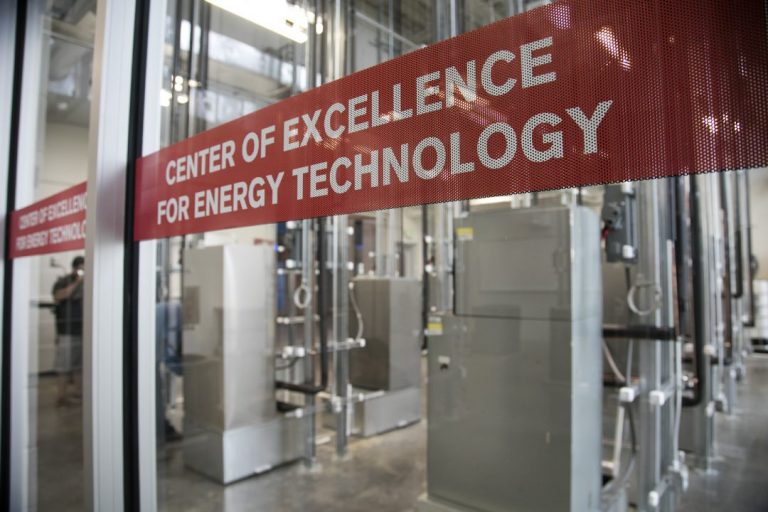
- If all these 22 GECs were an extension of the main university speacilizing in one particular field, then they could combine the knowledge of all the talented professionals in that field. For example, GEC Thrissur becomes the “Center for Electrical Engineering” and GEC Ernakulam becomes “Center for BioMedical Engineering”. This will attract all the top minds in the particular field, thereby increasing the credibility of the Center.
- With the consolidation and creation of “Center of Excellence”, more research can be driven to those centers. Universities become popular by their quality of research. If we have robotics center doing research in high end robots then successful companies will spin-off from that. Take examples of various companies coming out from universities in the US, like Boston Dynamics from Massachusetts Institute of Technology. More grants and private funding will come to universities for research purposes, raising the quality and attracting motivated students.
- Students should be allowed to learn at their pace, not a 4-year limit. For example, students need not take all 5 courses in a semester, they can take 3 and use their remaining time for projects, research, part-time work or anything else. They should be able to take the remaining 2 courses in the next semester. Other optional recreational classes like painting, crafts, swimming, public speaking, music etc should be available in colleges. This helps in developing students mental and physical health. Allowing students to learn at their own pace will help in better engagement and creativity.
- Better curriculum development is required. Topics that students learn in one course should be linked to other courses. So it feels less random learning, and more like building stack of knowledge. I feel that it will happen somewhat automatically when the “Center of Excellence” gets created. Subjects should also include soft skill development like communication & collaboration, critical thinking, technology literacy, etc. More emphasis has to be given to class participation, assignments and projects than exams.
The above points are valid for any government college, not just engineering. We can raise and support talents in Physics, Economics, Arts, Social Service, or any other topic if they are given opportunities to specialize in their interested field and led by teachers who really care about those fields, along with the infrastructure, technology and support of the government. This will provide tremendous output for the students and the state. For example, city based research can happen through these universities instead of hiring foreign consultants. My favorite type of research like: “Threat and Vulnerability model for the city as the climate changes” or “Creating Disaster Risk Management for the city”.
Private colleges should be allowed to work independently, they can bring in innovation much faster than government run entities. They could have their own university, syllabus and fee structure. Currently, the government tries to control the private colleges, this is not good for the private market and investors/innovators. Private colleges are important because it creates a healthy competition with the government colleges, and improves the overall system. Otherwise the government colleges will lag if they don’t have anything to compete against.
Once these colleges or “centers of excellence” have a full grasp on real-life application and trends in their field, they can start helping design high-school curriculum and make school-graduating students ready for college.
Schools
We all know that the students are facing increasing pressure to perform at schools, starting from a really early age. This kind of pressure is not good for kids. The amount of material kids have to learn in schools is very high. So most student are doing rote learning, which they tend to continue throughout their life in college and then at work. On top of school learning, kids are being pushed to tution centers, piano lessons, religious teachings, and some more weird classes. When do they get to enjoy their childhood?
The schools should reduce their syllabus load and start focusing on building basics. For example, teaching the importance of learning history or mathematics or science before starting to teach them those subjects. Give the kids time to absorb the basics through self-exploratory and fun learning. Then build the basic knowledge of those fields instead of force feeding entire algebra and calculus. When I graduated from school I knew differentiation and integration but I didn’t know what does differentiation/integration actually mean. I just knew the mathematics, and that is useless because I cannot use my knowledge in real-life situations. I knew pythogoras theorem, but I didn’t think that I could use that to measure the shortest distance from my home to school. (Update Dec 2019: I saw an interview of Manish Sisodia, Delhi Deputy CM, where he used similar example. Did he read this? *wink* Most probably no!)
It is not just about teaching the practical use of theory, but more about communicating the basics and letting the students explore in their your own way. Give students open ended assignments will boost their creativity. Instead of quantity of learned things, focus on the quality, so that it remains with them for a long time.
Why do kids have to spend time learning other new things outside of school? They should be playing, exploring and experimenting when out of school. This is why I feel that all the additional classes like music, language, religion, etc should come within the school curriculum. These should be optional classes. Students or their parents can choose which classes they want to attend, with a maximum limit so they don’t get overloaded. Religious teaching within a school can be a cause for concern, but I feel that it is better within a secular school curriculum than in extreme religious setting without any secular oversight.
Some other important classes needed are cultural activity, various art forms, individual sports, communication skills – how to interact with others in a respectable manner, financial skills- how to manage money, life skills – how to help in household activities and proper history of the world (not euro-centric).
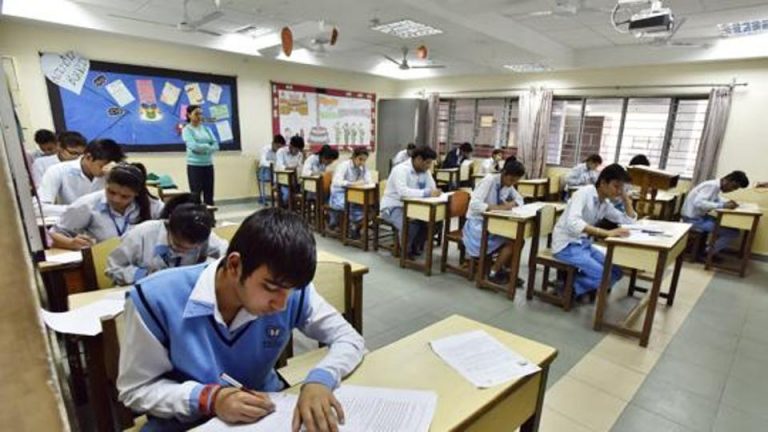
The biggest change I would like to have is to stop having year-end exams. In fact, each course subject should only be a maximum of 6 months long. The evaluation should be based on class participation, projects and monthly class tests. This makes the student fully engaged in the course topic, and not just learn at the end of the year. The course topics should be available to take any time. For example a student in grade 9 should be able to take a first level class in world history along with a grade 6 student. But they cannot take level 2 world history class unless they clear level 1 and are in grade 7 or above. This is just as an example, but creating these kind of options for students will allow them to try different things and choose what they are most interested in.
These ideas are for government schools only, because I feel that similar to private colleges, private schools should be allowed to have their own syllabus, fees and structure. It will help foster innovation in the education system.
Reservations in Education (Updated Apr 2017)
This is a critical topic for many. Some government don’t want to decrease any reservations because they don’t want to loose votes. The categories of reservations keep increasing as time goes on. Students in the general quota have to work harder for the decreasing number of seats. Why is this? This feels like rationing the student seats. Do we not have enough colleges in the state to provide education to everyone who wants it?
Underlying need for reservation is to provide equal chance for students from poor social/economical background to compete with students who have better access to education. So reservation is important to make an equitable student group. However, if the identification of reservation eligible student is flawed, then the government is providing an unfair advantage to those students compared to general category students, and causing frustration. The students who come through these reservations quotas often get discriminated at colleges. A better solution could look like this:
- Better identification of eligible students through verification of individual & family income tax statements, and family background.
- Provide free coaching and preparation materials to eligible students. They can compete better with other students in entrance exams. Show yearly data that the results of these students are improving.
- Remove the reservation quota for admission to educational institutions which require entrance exams.
- Provide partial or full scholarship or monthly stipend, depending on the students background and needs.
This will reduce discrimination and also weed out people who are abusing the reservation quota for their benefit.
There should still be reservation for employment in public sector because there is still low representation for some communities.
Access to Education (Updated Dec 2019)
e-Learning: More and more of education is moving to the internet. This opportunity has been really well utilized by private companies like Byju’s. Educational institutions will have to adapt to this changing landscape. Currently, there is resistance. Phones and laptops are not allowed in many schools and colleges. We need teachers who are comfortable with these technologies and know how to encourage student participation through them.
- All classrooms should be fitted with live recording feature, so students who are unable to attend class physically for various reasons, can join the class online.
- School and colleges should be setup with access to internet, where students can spend time any time of day to study, learn and collaborate.
- Teachers should encourage students to research topics on the internet, so they can have a healthy discussion in the classroom.
Course Credits: Course credits was a new thing during my study in the USA, and I feel that this is a good idea to implement in Kerala as well. Each class is worth some credit points, for example “Basic Statistics 101” is worth 3 credits. When students go through each class, they add up credits. So to graduate in particular major you need to obtain minimum credits. For example, to graduate MBA you need 72 credits, of which 36 credits should be in core classes, 12 is in your specialization and others are optional classes.
This system allows a lot of flexibility for students. If they want to move to another place, they can transfer their credits to a different university. If they want to change their specialization, they don’t have to start over, they just need to take more classes in that particular specialization. They can pause their course in between, go do something else and come back a year later to start from where they left off, they don’t need to start from beginning.
Implementation of this system will require a lot of planning from the state government, but will be very beneficial to the students.
Mentorship Program: The students are not work-ready on graduation, and this is because lack of exposure to the real world environment. Mentorship programs can be implemented where students in colleges are matched with mentors in the industry. There are lot of people who would be willing to provide their time to mentor younger generation. A system with proper checks allows students to interact and learn from mentors before entering the workforce. This also creates a better society by allowing meaningful conversations to happen between people from different generations.
Alumni Connection: Mentorship programs can start from alumni first. Keeping track of alumni and their achievements is good for colleges. Alumni management can reach out to these people and ask to give back to community and college through their time and skill.
Lifelong Learning: We know that learning is continuous and doesn’t stop after college. However, our current education system stops after colleges. New venues have to be established were older people can go to colleges to learn new things. For example, if someone in their 50s want to learn about the Indian constitution and political system, colleges should provide the venue to achieve this learning goal. There is also a high financial benefit for colleges because most people in the later age-group would have disposable income to spend for the courses.