My understanding of time.
Ever since I watched Sci-fi movies with mind bending paradoxical time loops, I have been trying to understand non-linearity of time as advocated by these movies and some scientists.
Space Time
Einstein’s relativity theory and space-time continuum has been a topic of discussion since a long time. I think I understand it, but I cannot be confident.
Space and time are relative concepts, each point in space has a time and gravitational force can effect this space-time continuum. Makes sense. How do scientists use this concept to prove that time is non-linear is beyond my comprehension. By non-linearity, I mean non-sequential time.
Event
An event occurs at a particular time. The perception of it might differ because of the speed of light and the gravitational pull, but the event itself has occurred at that particular time.
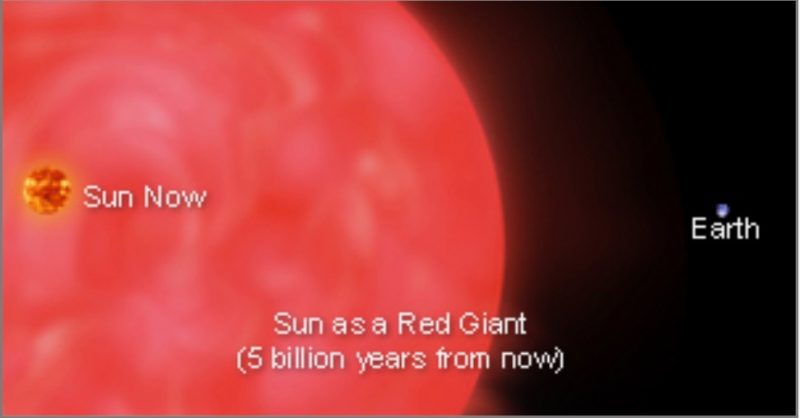
We now know that sun is 4.6 billion years old, and will die in 10 billion years. Before that it will turn into a red giant and eat up earth. Humans would probably be long extinct by that time. Suns death at 10 billion years is on a linear time from now. Sure that it will be different times if you view from planet Earth or from Neptune. But the event (sun death) will happen at a particular instance, which is on a linear time.
So I guess each location has its own linear time (space-time?). From the perspective of humans, that location is earth. Unless we can travel faster than speed of light, the point of reference should always be from earth.
Time Travel
Time travel is not possible, but viewing an old event in real time is theoretically possible. Even though practically we wouldn’t be able to do that in any foreseeable future. Even if we did, we would only be able to view the event, but won’t be able to interact or alter it.
Let’s look at an example. I want to see what happened exactly 24 hours ago in real time. That scene or its “light” has travelled at speed of light (around 3×10^8 meters per second). So right now the light is at 24hours x 60minutes x 60seconds x (3×10^8) meters away, which is 2,592×10^7 km or 1,610×10^7 miles away. If we can travel this distance within the next one second, we can catch up with the light to be able to view it. I’m neglecting the light travel in that 1 second of our travel, because in grand scheme of things, it is a small distance. Traveling at this speed is not only impossible, but unimaginable, at least for the foreseeable future!
Well, let’s assume we can travel at that speed, so we reach the rendezvous point. But when the light comes in, we cannot see the “event” from 24 hours ago because it has already mixed/interacted with so many other light sources, that the one we want to see is indistinguishable. If we know all the light sources of the path, we might be able to strip out unwanted sources and view the one we want. Again, this seems highly unlikely to achieve.
So time travel to view an old event in real time is dependent on 2 major developments if achievable by humans:
1. Being able to travel at speeds greater than some multiple of light-days (number of days converted to seconds x speed of light).
2. A super-computer which can remove all interference and deduce the light source we want to view.
So for now, we will have to rely on our historians and archaeologists to tell us what happened in early years!